
Overview
Intake was an internal innovation initiative at Arnold Worldwide designed to make it easier — and less intimidating — for creative staff to surface proactive ideas for clients. The project explored whether a lightweight mobile and desktop tool could turn scattered inspiration into ideas that actually reached clients.
Problem
Creative agencies live and die by proactive thinking, but most agency projects are "one-and-done," with no built-in process for staff to surface ideas outside an active brief. Arnold needed a way to encourage creative professionals to generate proactive ideas for clients, and to use technology to make submitting those ideas easier.


Role and Responsibilities
As UX and Visual Design Lead, I led research and interviews with creative staff, then presented findings back to the team to shape direction. I worked closely with developers to design an experience that felt right while staying technically feasible, and presented proposals, test findings, and demos to stakeholders throughout. I partnered closely with developers, stakeholders, and strategy teams to stay aligned, and to pivot quickly when something wasn't working.

Solution
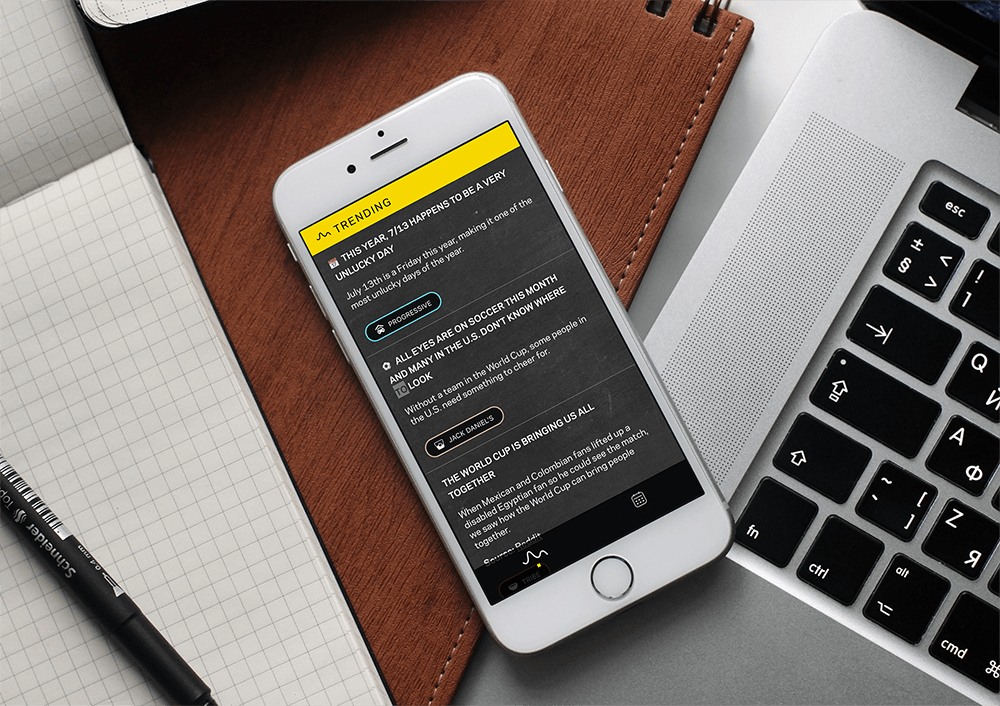
We built a mobile app and a companion native desktop app that surfaced strategic insight for each client — essentially a one-paragraph brief — to spark ideas. From there, users could submit their own ideas directly through the app. Submissions routed to Creative leadership for review, and the strongest ideas were selected to move forward toward a client.
We began by interviewing creative staff and gathering requirements, and set a clear bar for success: 10 ideas submitted, and at least 1 idea sold through to a client. If our MVP hit those numbers, we'd continue iterating and adding features.

Key Challenges
The product generated real excitement, and even praise, but engagement stayed stubbornly low. Follow-up interviews revealed why: staff felt intimidated knowing their work could land directly in front of the Chief Creative Officer, which made many ideas feel not "good enough" to submit at all. That psychological barrier — more than any feature gap — was the real reason we missed our early targets. We kept iterating and eventually did reach one sold-through idea, but it raised a deeper question about whether strategy teams could sustainably produce that volume of writing for the return it generated.
Results and Impact
The product itself didn't reach the scale we'd hoped for, but the project surfaced a clear and valuable picture of the creative department's culture — how ideas really get made, and what stops people from sharing them — that went on to inform several other internal initiatives.

Reflection
This is one of the projects I learned the most from precisely because it didn't fully succeed. It was a reminder that the biggest blocker to adoption is rarely the interface — it's often an unspoken social or emotional barrier that no amount of UI polish can fix. Uncovering that barrier turned out to be more valuable than the product itself.